Why We Treat More Ingested Objects in Pets During Spring
Here at Dupont Veterinary Clinic, we see an uptick in spring GI obstruction in pets. But why is this? How can pet parents stay vigilant and prevent their dogs and cats from this painful and dangerous situation?
Let’s dive in.
The Most Common Causes of Spring GI Obstruction in Pets
We don’t know about you, but for us, the melting of snow and the coming of spring brings both excitement and a prick of dread. You see, winter comes with a ton of…weather. Wind, cold, snow, and rain can mean trash gets whipped through the neighborhood and buried under snow, dirt, or your front porch.
As the spring brings back the sunshine, we start to notice all this debris. We also start hauling bags of mulch home from the yard and garden store, eagerly planting gardens and flowerbeds, and adding to the delightful mess of spring.
But at some point, the messes must get cleaned up. Otherwise, our pets might start exploring the debris winter left behind and spring brought in—with potentially dangerous consequences.
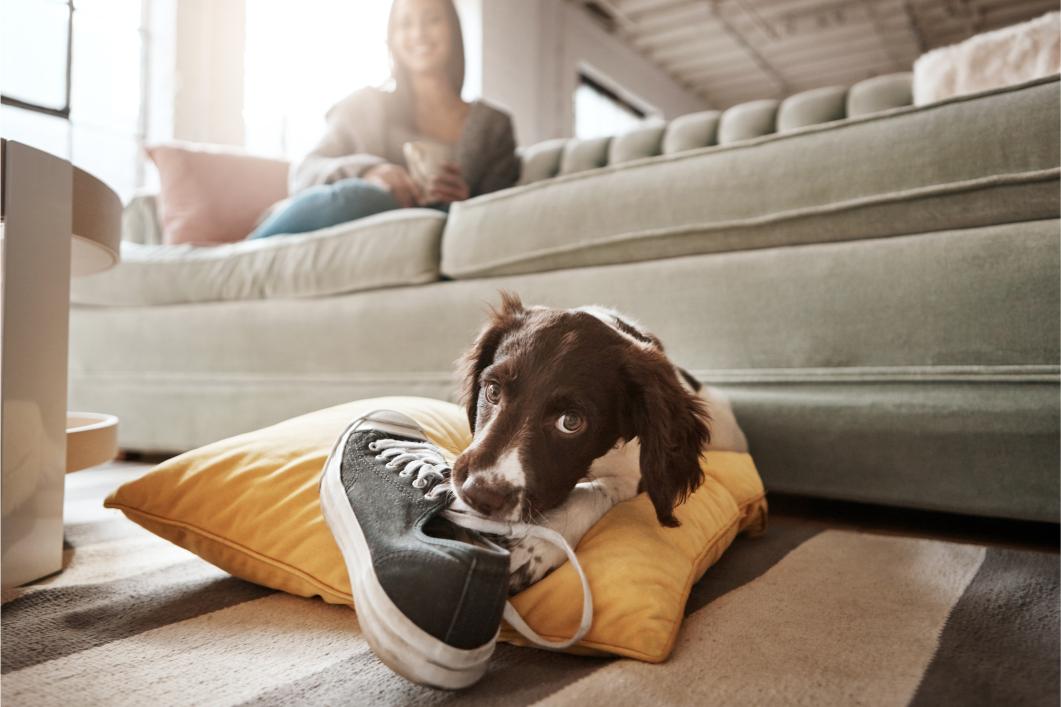
Your dog might find an old, beloved, half-disintegrated and no-longer-safe toy under the porch and begin to chew away. Your kitty might gnaw at plant material, gardening twine, or intriguing garbage.
When a piece, shard, or portion of this detritus gets swallowed, gastrointestinal obstruction—when an object gets stuck in your pet’s digestive system—becomes a risk.
Signs Your Pet May Have Ingested a Foreign Object
Gastrointestinal obstruction is painful, and it can become life-threatening in a flash. Reach out to your veterinarian right away if you notice:
- Repeated vomiting or retching
- Loss of appetite or hesitation to drink water
- Lethargy and weakness
- Abdominal pain
- Straining to poo (or not pooing at all)
Early diagnosis and treatment can make a big difference in your pet’s outcome, so if you’re unsure whether to bring her in, play it safe and call the vet.
Diagnosis and Treatment for GI Obstruction in Pets
When veterinarians suspect a GI blockage in pets, the first priority is to confirm the diagnosis with diagnostic imaging—usually X-rays and/or an ultrasound. These tools help us see where the blockage is and how big, small, or complex it is.
Some objects can pass through your pup or kitty’s system with close monitoring, but others might require an emergency dog surgery in the spring to safely remove the obstruction.
While a springtime foreign body surgery for your dog or cat may not have been on your bingo card for this year, it is a necessary measure to prevent intestinal rupture or tissue death in your pet.
If you’re worried your beloved pet might be suffering from a GI obstruction, please reach out to the highly skilled team at Dupont Veterinary Clinic. We’ll be with you every step of the way. Call us at (260) 637-7676 to get your pet the treatment she needs for the best chance at a speedy recovery.